
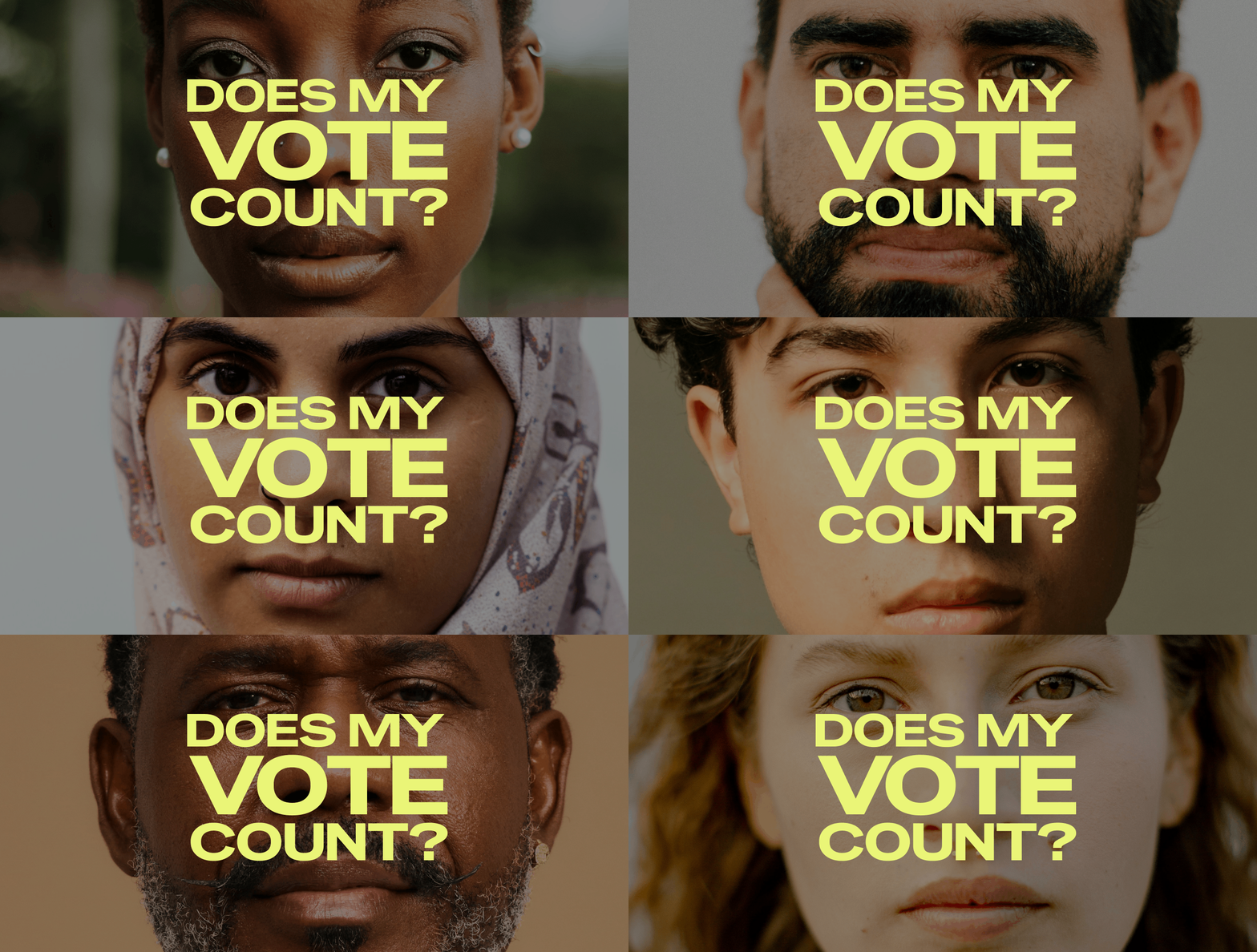
Does my vote really count?
Yes. Local and state elections are frequently decided by a few hundred votes — sometimes fewer. Your city council, school board, and state legislature shape more of your daily life than most national races, and those are exactly the races where turnout is lowest and one vote carries the most weight.
Throughout history, offices from local to federal have been determined by a handful of votes on several occasions, demonstrating the immense stakes tied to small vote counts.
What does my vote impact?
Your vote affects so much more than just who represents you. Elections decide who writes, interprets, and enforces the laws that govern your community. Your vote determines who has control over funding decisions for universities, roads, public safety, and housing. A ballot can determine what you learn in school, how much minimum wage pays, and even the nation's next generation of leaders.
why should I vote if the election process feels broken?
Voting is one of the most direct ways to shift power and demand change. Because broken systems don't fix themselves, our ballots are one of the tools we have as community members and citizens to bring about the changes we want to see. Disenfranchisement and the weakening of our democratic system happen when voting participation is low. When voting participation is low, outcomes and systems don't change. People who benefit from this lack of change count on voter frustration to turn into silence.
how do recent executive orders or regulations impact my ability to vote?
While there have been many attempts by the federal government to change elections and voting rights, nothing has been passed into law or gone into effect. As a result, recent executive orders or regulations don't affect your ability to vote in Michigan. Your local clerk and the Michigan Department of State will always work to inform you of election changes and who will be affected by them.
will my ballot be secure?
Yes! Poll workers, local clerks, monitors and many of Michigan's election administration personnel work hard to make sure your vote is safe and counted. These are Michiganders who live, work and contribute to your community. They receive hours of training and information to ensure the process is secure and barrier-free. If you have any questions about election security, reach out to your local clerk's office.
what's the best way to vote?
Determining the best way to cast your ballot is a personal decision often based on your schedule or lifestyle. When deciding the best way to vote, consider things like your work or school schedule, transportation access, accessibility needs, etc. Whether you want to vote from the comfort of home or take a trip to the polls, Michiganders can vote by mail, engage in early voting or vote in-person on Election Day. Research your options and make a plan that works best for you.
am I eligible to vote in Michigan?
You're eligible if you're a U.S. citizen, at least 18 years old by Election Day, and a resident of the city or township where you're registering for at least 30 days before the election.
I have a felony record. Can I vote?
In Michigan, yes — as long as you are not currently serving a sentence in jail or prison. You do not lose your right to vote for a past conviction, probation, or parole.
what if I move before Election Day?
Update your registration with your new address as soon as you can — online, by mail, or in person. If you move within 30 days of an election, you can still vote a normal ballot at your old address, or an updated ballot at your new city/township clerk's office.
do I need an ID to vote?
You'll be asked to show photo ID at your polling place. If you don't have one, you can sign an affidavit instead and still vote a normal ballot — no ID is required to vote in Michigan.
I'm 16 or 17. Can I do anything?
If you're 17½ or older, you can pre-register right now, so your registration is automatically activated and your ballot is ready the moment you turn 18.
what's the difference between the primary and the general election?
The primary narrows the field of candidates within each party. The general election in November is when voters choose from those finalists. Local ballot measures and nonpartisan races (like judges and school boards) often appear on both.
how do I know what’s actually on my ballot?
Use the Michigan Voter Information Center to view a sample ballot specific to your address before Election Day, so nothing on the actual ballot surprises you.